
Wedding Reception Timeline: An Hour-by-Hour Guide (and Where to Put the Fun)
A typical wedding reception runs about five hours, from guests arriving to the last dance, broken into roughly: arrival and drinks (60 to 90 min), the meal (90 min), speeches (20 to 30 min), then dancing and games for the rest of the night. The exact timings flex around your day, but knowing the shape of a reception is what stops the energy sagging in the gaps. And there are more gaps than couples expect.
If you're planning your own reception, this is the running order to build from, plus the spots where guests get bored and how to fill them.
TL;DR
- Plan the reception as five hours with three quiet killers: drinks while you're away, post-meal turnaround, mid-evening dip.
- The best game slot is the turnaround between dinner and dancing: guests are fed, seated, and waiting.
- Keep drinks under 90 minutes, speeches under 30, and leave at least two hours for dancing.
- Self-running activities fill gaps without you standing at a mic.
The standard reception timeline
Here's a common five-hour reception, hour by hour. Shift it to suit your venue and meal.
Arrival and drinks reception (60 to 90 minutes)
Guests arrive while you're often away taking photos. This is the first big gap: a room full of people, half of whom don't know each other, with nothing to do but queue at the bar.
The wedding breakfast / meal (90 minutes)
Everyone's seated and fed. Energy is calm and social. Courses come with natural pauses between them.
Speeches and toasts (20 to 30 minutes)
Usually after the meal (sometimes between courses). The room's attention is at the front.
The turnaround (15 to 30 minutes)
Tables are cleared, the room is reset for dancing, the band or DJ sets up. The second big gap: guests are full, seated, and waiting.
First dance and dancing (2+ hours)
The party proper. Energy builds, then naturally dips a couple of times before the final push.
The send-off (end of night)
Last dance, sparkler exit, or a quiet fade-out.
Gaps are where guests decide the day feels long. Speeches and dancing get the attention in planning docs. The empty minutes between them decide whether people stay engaged.
Where receptions lose energy (and how to fix it)
Three moments quietly drain the room. Plan for them and the whole day feels livelier.
Gap 1: The drinks reception
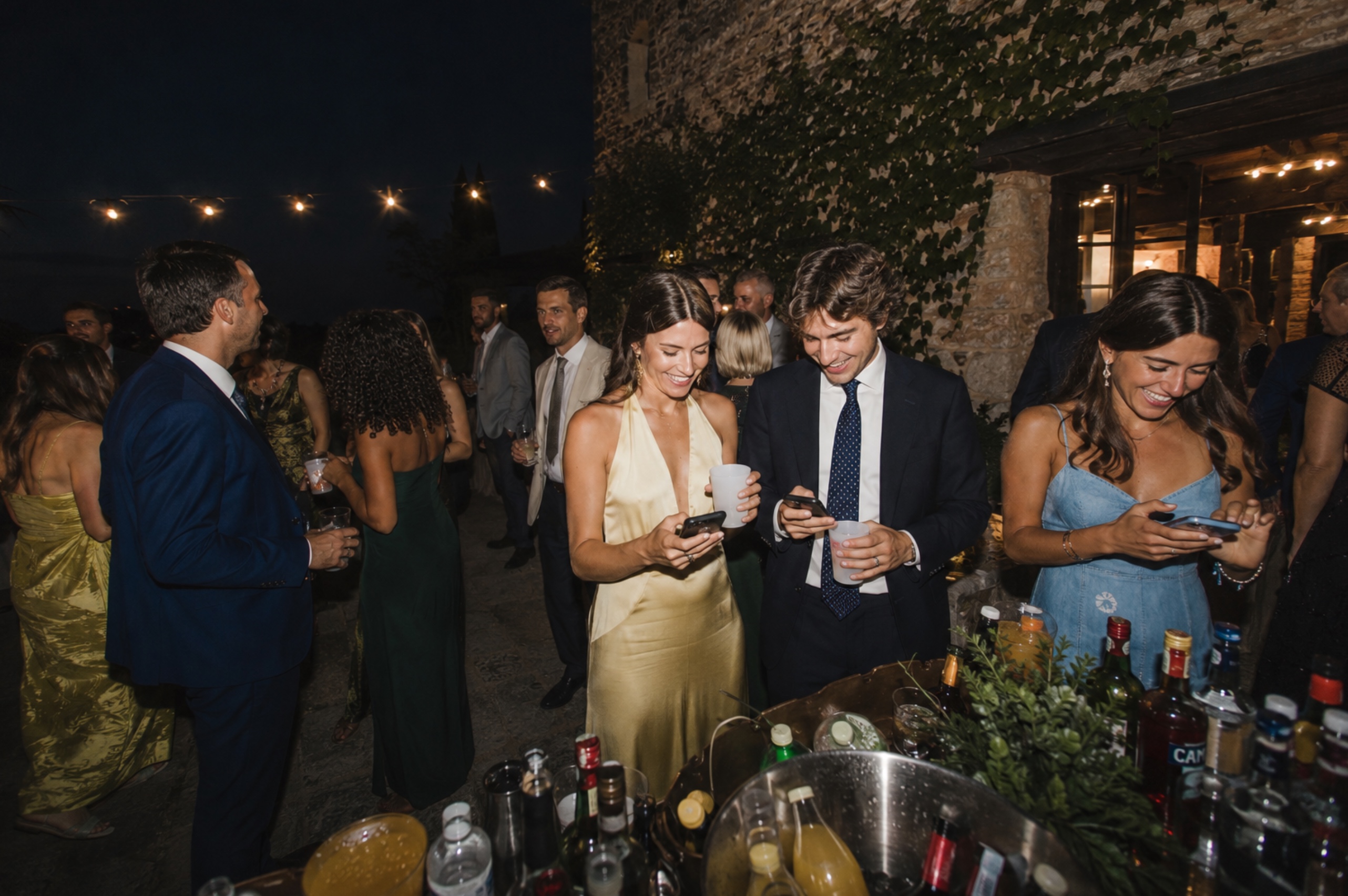
You're off having photos taken for up to 90 minutes. Your guests are introducing themselves to strangers. Fix it with a self-running activity: lawn games, or a quiz guests can start on their phones the moment they arrive, so the room warms up without you there to run it.
Gap 2: The post-meal turnaround
Everyone's eaten and the dancing hasn't started. This is the classic lull where guests start checking their phones or drifting outside. Fix it with a live game right here. It's the single best slot in the whole day for reception trivia. The room's already seated and looking at the front. For question banks ready to drop into that slot, try wedding trivia questions about the couple or a wedding table quiz.
Gap 3: The mid-evening dip
A couple of hours into dancing, energy flags. Fix it with a quick second round of something, or a crowd moment that re-gathers everyone.
Put the quiz on the timeline like a course. If it's not scheduled, it gets skipped when the day runs long. Block 20 to 30 minutes for the post-meal game and protect it.
A sample reception running order with games built in
- 2:00pm: Guests arrive, drinks reception begins. Lawn games and a quiz lobby open on phones.
- 3:30pm: Guests seated for the meal.
- 5:00pm: Speeches.
- 5:30pm: Room turnaround. Live trivia round on the big screen (the prime slot).
- 6:00pm: First dance, dancing begins.
- 8:00pm: Quick second game or crowd moment to lift the dip.
- 11:00pm: Last dance and send-off.
How long should each part of the reception be?
As a rule of thumb: keep the drinks reception under 90 minutes so it doesn't drag, the meal around 90 minutes, speeches under 30 (your guests will thank you), and leave at least two hours for dancing. The more you front-load the structured bits, the more open party time you get at the end.
Fill the gaps with ourreception.com
The post-dinner turnaround is the best slot in the day for a game, and ourreception.com is built to run there with almost no setup:
- No app for guests. They join the trivia with one link or QR code (no install, no account), so even the gap during the drinks reception can run while you're away having photos.
- Your questions, on the big screen. Write trivia about the two of you and run it from your laptop while it shows on the screen, turning the turnaround lull into the room's loudest moment.
- A live leaderboard. Scores update as guests play, so the dead time between dinner and dancing becomes a shared event instead of a wait.
Five minutes of setup to cover the gaps that would otherwise flatten the day.
Frequently asked questions
How long is a typical wedding reception? About five hours, from guests arriving to the last dance. That usually breaks into a 60 to 90 minute drinks reception, a 90-minute meal, 20 to 30 minutes of speeches, and two or more hours of dancing.
What order does a wedding reception go in? Most follow: arrival and drinks, the meal, speeches, a short room turnaround, then the first dance and dancing, finishing with a send-off. Speeches sometimes happen between courses instead of after.
When is the best time for wedding games? The turnaround between the meal and the dancing is ideal. Guests are fed, seated, and facing the front, and the room is waiting, so a live game lifts the energy straight into the party.
How do you stop a wedding reception from dragging? Plan for the three lulls: the drinks reception while you're taking photos, the post-meal turnaround, and the mid-evening dip. Fill each with a self-running game or activity so the room never sits in silence.
How long should wedding speeches be? Aim for under 30 minutes total across all speakers. Shorter, well-paced speeches keep the room's energy up far better than long ones, however heartfelt.