
Wedding Icebreakers for Mixed-Age Tables (When Guests Are Strangers)
The best icebreaker for a table of mixed ages and strangers is something everyone can do at once with no pressure to perform: a shared question, a simple game, or a quiz on their phones. It gives people a reason to talk without forcing introductions. Seating your university friends next to your great-aunt is one of the trickiest parts of a wedding, and a good icebreaker bridges the gap that small talk can't.
If you've stared at a seating plan wondering how a 24-year-old and a 74-year-old will find anything to say, this is for you.
TL;DR
- Mixed-age tables fail when you force introductions. They work when you give people a shared job.
- The best icebreakers need no performing, a shared focus, and zero barrier to joining (no app downloads).
- A live phone quiz beats almost everything else because the debate over answers is the conversation.
- Put a QR code on the table card and the teenager and the great-aunt both play.
Why mixed-age tables are hard (and worth getting right)
Weddings throw together people who'd never normally share a table: old family friends, new colleagues, teenage cousins, plus-ones who know nobody. Left to themselves, they default to polite, stilted small talk, or silence broken only by the meal.
But these tables are also where the best wedding moments happen, when a quiet conversation actually catches. The job of an icebreaker is to give people a shared thing to do so the talking starts on its own.
The seating chart is not the icebreaker. Putting strangers next to each other is inevitable. What you put on the table is what decides whether they talk or stare at their phones.
What makes an icebreaker work across generations
The ones that bridge an age gap have three things in common:
- No performing. Nobody wants to "share a fun fact about themselves" in front of strangers. Good icebreakers are low-pressure.
- A shared focus. People bond over a thing (a question, a game, a screen), not over being told to mingle.
- No barrier to joining. If grandad needs to download an app, he's out. The best icebreakers work for everyone from the teenager to the technophobe.
10 icebreakers that work for any age
- A live quiz on phones: everyone plays the same questions at once, regardless of age.
- Table question cards: "What's your best wedding memory?" gets every generation talking.
- "How do you know the couple?": the simplest opener, printed on the table.
- A guess-the-year photo round: old and young both have a fair shot.
- Two truths and a lie: works at any age, no equipment needed.
- A shared table challenge: "build the tallest thing from what's on the table."
- Wedding bingo: spot moments through the day (first dance, someone crying).
- A "guess the couple's answer" game: the table debates, then sees who's right.
- Childhood photo guessing: match guests to baby photos on a board.
- A music round from different decades: a song everyone's parents loved, then one for the kids.
Notice the winners are group activities. They give the table a shared job, which is far easier than expecting individuals to strike up conversation. The same logic rescues a table where guests don't share a language, not just an age group — see bilingual wedding entertainment for games that play in more than one language at once.
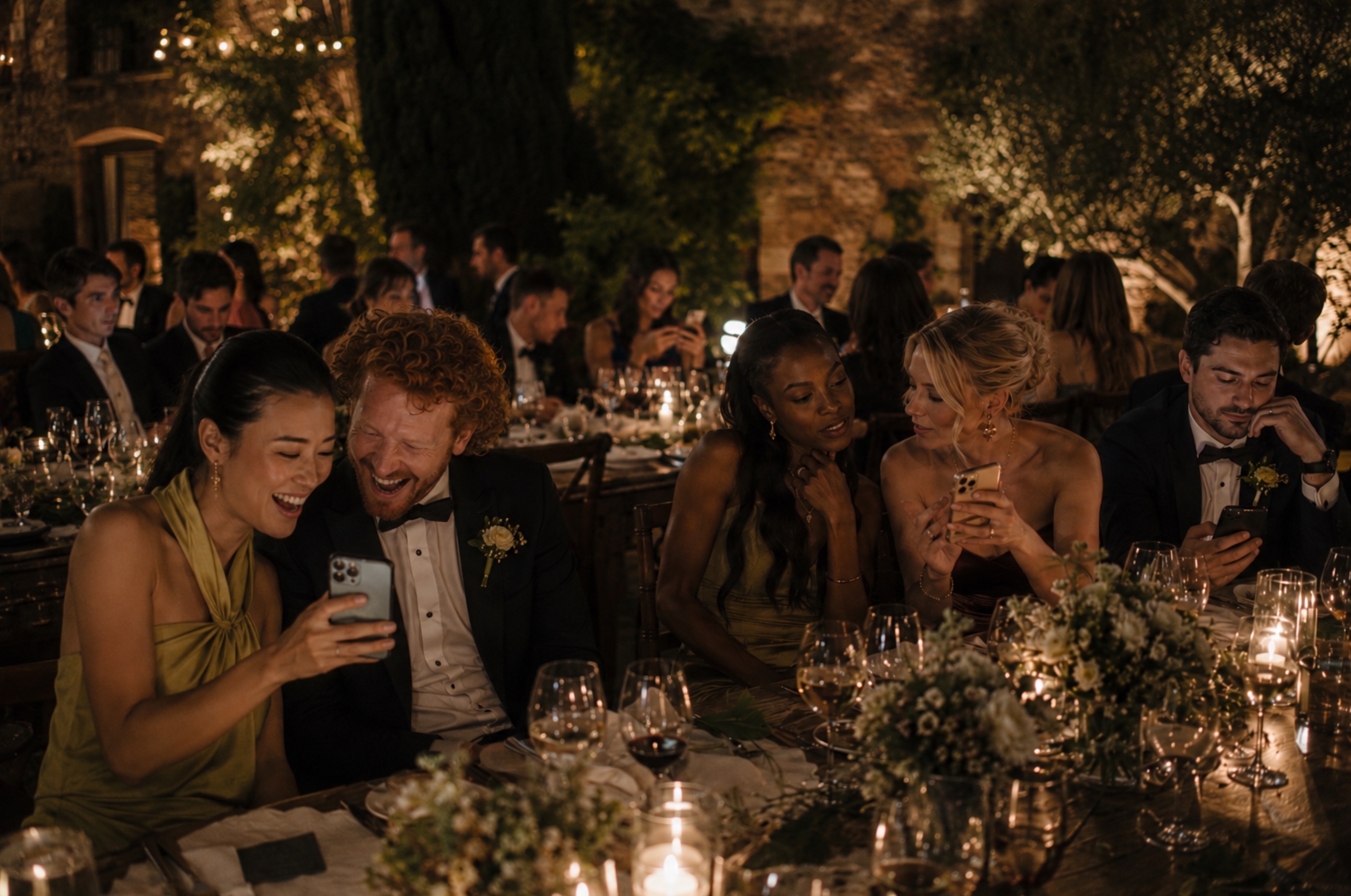
Print one line on every table card. "Scan the QR code to play" is enough. If the how-to is visible, you don't need an MC to explain it.
Why a live quiz beats forced introductions
Of all the options, a phone-based quiz does the most work across an age gap. Here's why:
- Everyone plays at the same time, so there's no spotlight on any one person.
- The table naturally debates the answers ("no, it was definitely 2019!") and that is the conversation starting.
- A leaderboard gives them a shared goal, which bonds a table faster than anything you could script.
- It needs no setup from guests if it runs in the browser, so age is no barrier.
The teenager and the great-aunt end up arguing happily over which year the couple got engaged. That's the table broken, with no awkward "let's go round and introduce ourselves" in sight.
Run an all-ages icebreaker with ourreception.com
ourreception.com is the kind of icebreaker that works for every guest at the table, whatever their age:
- No app for guests. They join with one link or QR code in the browser (no install, no account), so the teenager and the technophobe both play with equal ease.
- Your questions, shared by the table. Write trivia about the two of you. The table debates the answers together, and the debate is the icebreaker.
- A live leaderboard. A shared goal gives a table of strangers something to rally around, bonding mixed-age guests faster than small talk ever could.
It turns the hardest table on your seating plan into the loudest one.
Frequently asked questions
What's a good icebreaker for a wedding table of strangers? Something everyone can do at once with no pressure: a live quiz on phones, table question cards, or a shared table challenge. Group activities work far better than expecting strangers to introduce themselves.
How do you get mixed-age tables to talk at a wedding? Give them a shared focus rather than forcing introductions. A game everyone plays together, especially a quiz where the table debates the answers, gets conversation going naturally across generations.
What icebreakers work for older and younger guests together? Choose ones with no age barrier: a browser-based quiz, two truths and a lie, guess-the-year rounds, or music from different decades. Avoid anything that needs an app download, which loses older guests.
Should you seat strangers together at a wedding? It's often unavoidable, and it can work well with the right icebreaker. A shared activity at the table turns strangers into a team, which is when the best unexpected wedding moments happen.
Why does a quiz make a good icebreaker? Everyone plays at once with no spotlight on anyone, the table naturally debates the answers, and a leaderboard gives a shared goal. That combination starts conversation between guests of any age without anyone feeling put on the spot. For a ready-made multi-round format, see 60 wedding table quiz questions.