
Bilingual Wedding Entertainment: How to Bring Guests Together in Any Language
The best entertainment for a bilingual wedding is anything guests can join all at once without needing to understand a single spoken language: a phone quiz that shows questions in both languages, a photo quest led by pictures, and a guestbook guests fill in from their own phone in their own words. It works because it gives both sides of the room the same thing to do at the same time, so the language gap stops being the thing everyone's quietly working around.
If one family speaks Spanish and the other English, or your guest list runs across three languages and two continents, this is for you.
TL;DR
- Bilingual weddings fall flat when entertainment runs in one language from the front. Half the room switches off.
- The fix is activities everyone plays together on their own phone, in their own language, at the same time.
- A live trivia game with questions in both languages, a photo quest guided by images, and a translatable guestbook all clear the language barrier.
- Put a QR code on the table and grandma in Riga and your college friends both join, no app, no account, no shared language required.
Why do bilingual weddings need different entertainment?
A single-language reception can lean on a charismatic MC talking from the front. A bilingual one can't. The moment your host cracks a joke in one language, half the room laughs and the other half politely waits to find out what's funny. Do it the other way and you've lost the first half. Speeches, games and announcements that live in one language quietly sort your guests into an in-group and an out-group all night.
That's a shame, because a wedding is often the only time these two worlds meet. The people who most need a reason to mix (your partner's cousins and yours, one grandmother and the other) are exactly the ones a monolingual game leaves stranded.
The barrier isn't the language, it's the format. A microphone and a single language forces everyone to follow one person. Give guests something they each control on their own phone and the same activity can speak to everyone at once.
What makes an activity work across languages?
The entertainment that bridges a language gap tends to share three traits:
- Everyone plays at once. No one waits for a translation of what just happened. The activity is happening in their language too, live.
- A shared, often visual focus. People bond over a thing (a photo, a question on a screen, a leaderboard), not over a speech they half understood.
- No barrier to joining. If a guest needs to download an app or read a sign-up form in a language they don't speak, they're out before they start.
Notice these are the same qualities that make an activity work across ages too. The teenager, the technophobe and the guest who doesn't speak the room's main language all need the same thing: something easy, shared and instant. (We go deeper on the age side in wedding icebreakers for mixed-age tables.)
How do you run wedding trivia in two languages?
Trivia is the strongest bilingual activity there is, as long as you set it up so both languages sit inside the same game rather than running two separate quizzes.
With ourreception.com you write your own questions, so you control the wording completely. That means you can:
- Phrase each question in both languages: the same fact, written twice, so nobody's guessing what's being asked.
- Let the app meet each guest in their language. Guests join from a QR code and the interface (buttons, prompts, the leaderboard) appears in their own language on their own phone.
- Keep everyone in one shared game. There's a single leaderboard and a single set of rounds. The languages differ; the competition doesn't.
The magic is what happens at the table. A question about where the couple first met sparks the same argument on both sides of the room, and guests start leaning across the language line to compare answers. The debate is the mixing. By the third round, your aunt and your partner's college roommate are a team, whether or not they share a word of small talk.
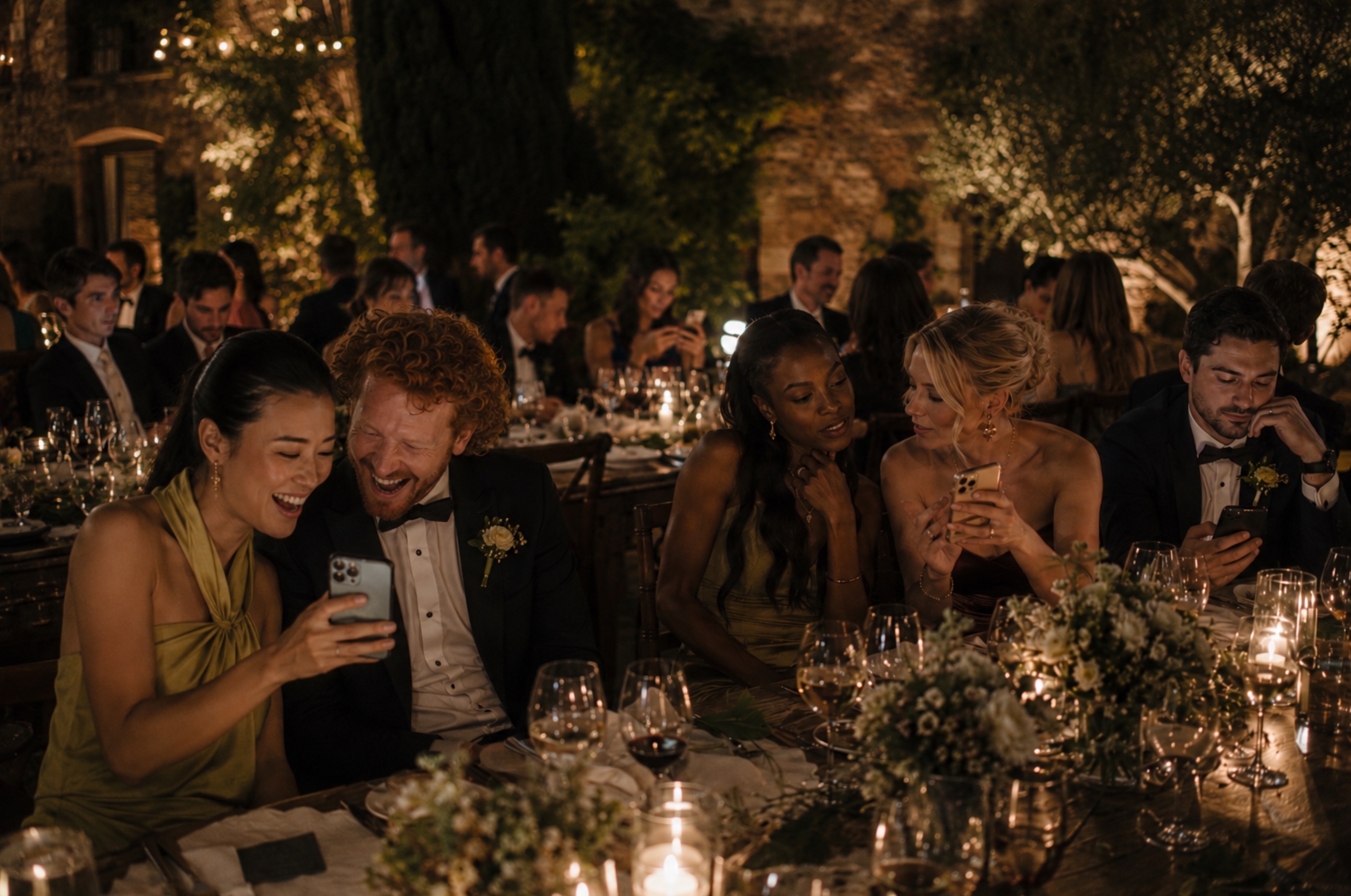
Write questions about the couple, not general knowledge. "How many countries have they visited together?" lands in any language and belongs to both families equally. Trivia about one country's pop culture quietly excludes half the room.
Photo quests: the activity that needs no translation at all
If trivia is the strongest bilingual game, a photo quest is the most effortless, because a photo needs no language whatsoever. You give guests a list of moments to capture ("the couple's first dance," "someone crying happy tears," "the oldest and youngest guest together") and they hunt them down on their phones.
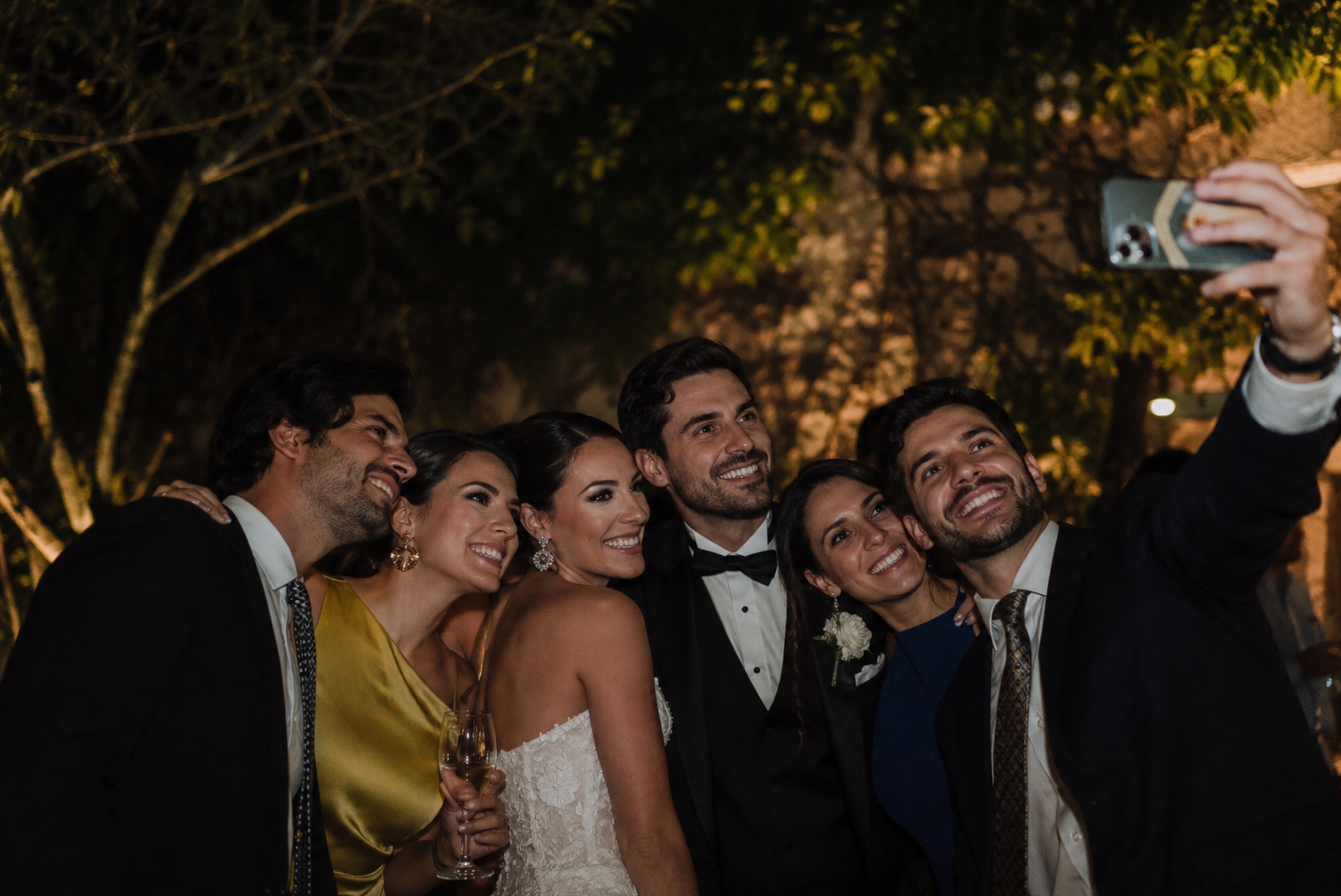
Guided by images and simple prompts, the mission reads clearly to everyone, and the output is pure memory with zero words attached. You end the night with hundreds of candid photos from both sides of the family, all in one shared gallery, collected from a single QR code with no app to install. (Here's a full list of prompts in our guide to the wedding photo scavenger hunt.)
For a multilingual crowd it does something subtler too: it sends guests physically around the room looking for each other. The prompt "a photo with someone you've never met" is worth ten forced introductions, and it doesn't care what language the two strangers speak.
A guestbook every guest can actually sign
Paper guestbooks quietly ask everyone to write in the language of whoever laid it out. A digital guestbook opened from a phone doesn't. Each guest writes their message in their own language, in their own words, and the app's menus and prompts appear in their language too, so there's no moment of standing over a book unsure what's being asked of them.
You get a single collection of notes spanning every language at your wedding, which, years later, is a far truer record of who was actually in the room than a page of messages in one tongue.
Digital doesn't mean less personal. A message typed by your partner's grandmother in her first language, that you can later run through a translation, is more heartfelt than a rushed line she wrote in a language she was straining to spell.
How do you put bilingual entertainment together on the night?
You don't need all three at once. A simple, language-proof flow looks like this:
- Cocktail hour: the photo quest opens. Guests mingle and hunt for shots while they find their feet. (More ideas in wedding cocktail hour games.)
- After dinner: the live trivia game, questions in both languages, one shared leaderboard. This is your peak mixing moment.
- All night: the guestbook and gallery stay open on the same QR code, so guests drop in photos and messages whenever they like.
One QR code on each table card can carry all of it. Print a single line (the equivalent of "scan to join" in both languages) and you've told every guest how to take part without an MC translating anything.
Run it all with ourreception.com
ourreception.com is built for exactly this kind of mixed room:
- No app for guests. They join with one link or QR code in the browser (no install, no account), so a language barrier never becomes a download barrier.
- An interface in your guests' language. Guests play trivia, sign the guestbook and browse the gallery with the app speaking their language, not just yours.
- Your questions, your wording. Write trivia in both languages so the same game belongs to both families, and watch the table debates do the mixing for you.
- One shared gallery and guestbook. Photos need no translation, and messages arrive in every language your guests speak.
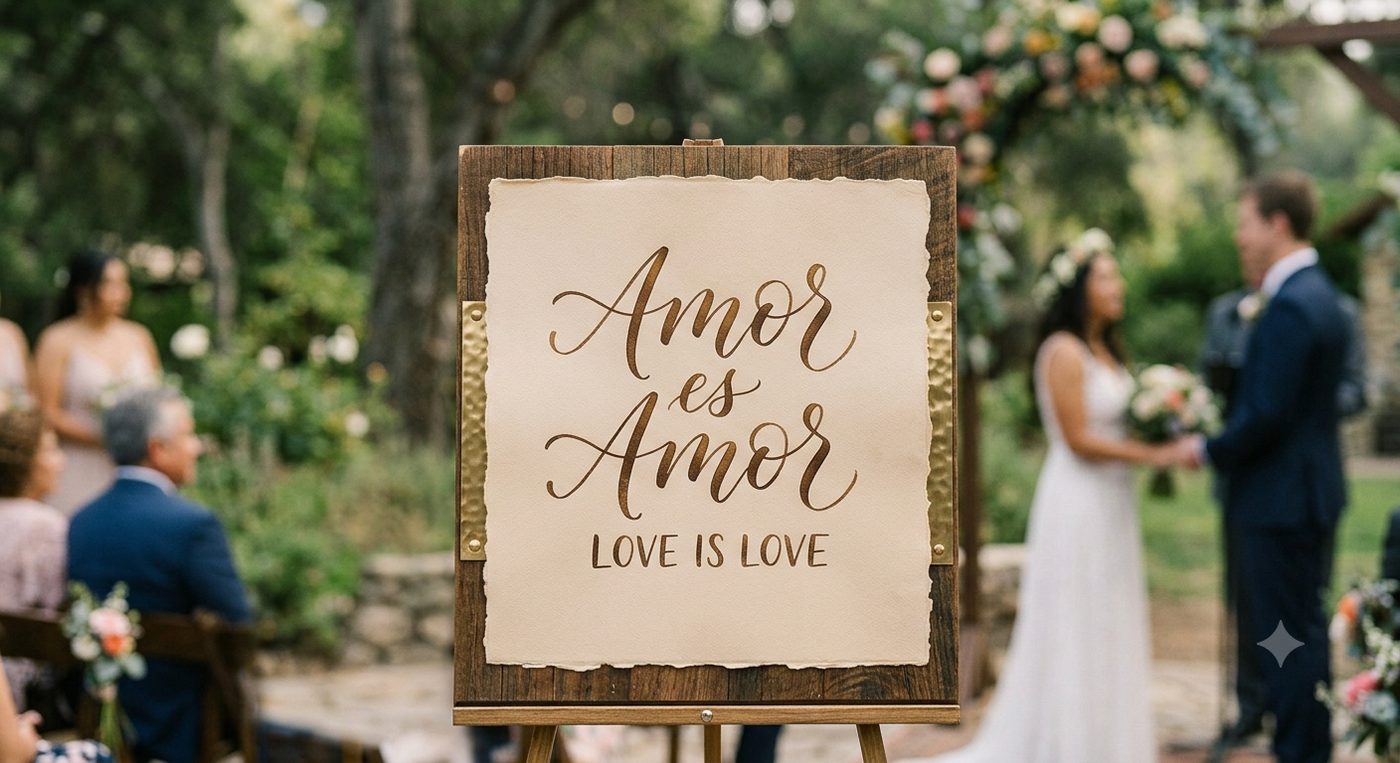
It turns the hardest thing about a bilingual wedding (two rooms that don't quite meet) into the best thing about it.
Frequently asked questions
How do you entertain guests who speak different languages at a wedding? Choose activities that don't rely on one shared language: a phone quiz where questions appear in both languages, a photo quest guided by pictures, and a guestbook guests fill in from their own phone in their own language. Anything everyone can join at once, with no app to download, bridges the gap far better than a host speaking from the front in a single language.
What wedding games work when guests speak different languages? Games with a visual or shared focus travel best across languages: a live trivia game with questions shown in both languages, a photo scavenger hunt led by images rather than words, guess-the-year photo rounds, and music from both cultures. Avoid word-heavy games like puns or wordplay that only make sense in one language.
How do you make a bilingual or multicultural wedding feel inclusive? Present the key moments in both languages so nobody is left guessing, and pick group activities everyone can play at the same time rather than watch. When guests from both sides are on the same team debating a trivia answer or hunting the same photo, the language barrier stops mattering and the two families start mixing.
Can wedding trivia be played in two languages? Yes. With ourreception.com you write your own questions, so you can phrase each one in both languages, and the app interface itself adapts to each guest's language on their phone. Guests read, answer and see the leaderboard in whichever language they're most comfortable in, all in the same game.
How can guests sign a guestbook or share photos in their own language? A digital guestbook and photo gallery that guests open from a QR code lets each person write their message in their own language, and the app menus and prompts show up in their language too. Photos need no translation at all, so the gallery fills up with memories from every corner of the room regardless of who speaks what.